
What does an HMO compliance audit check?
We check the house against its licence, the law and the council's standards, room by room. A typical audit covers:
- Licence conditions: occupancy limits, room use, amenities and any deadlines for works
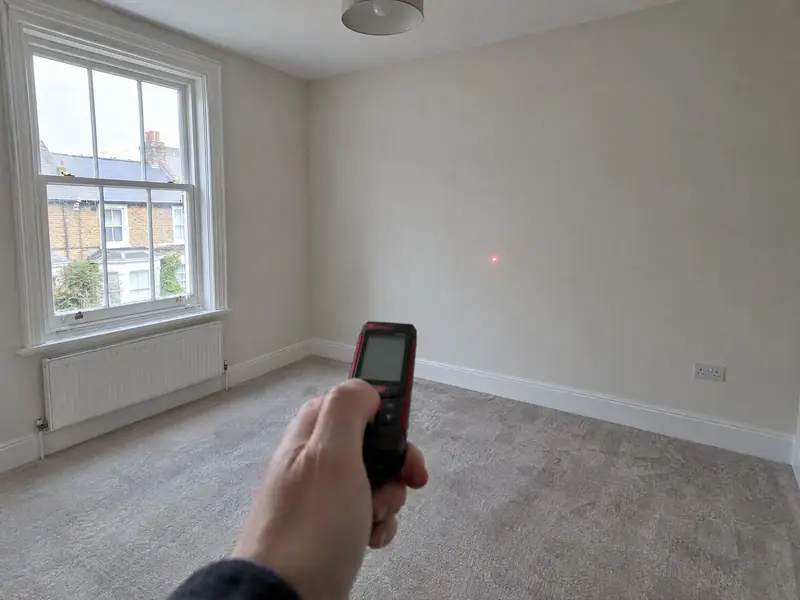
- Room sizes: every bedroom measured against the national minimums of 6.51 m² for one person over 10 and 10.22 m² for two, with floor area under a ceiling lower than 1.5 m left out
- Fire precautions: fire doors, self-closers, alarms, emergency lighting, escape routes and the fire risk assessment
- Certificates: gas, electrical, alarm and lighting records, and whether they are in date
- Amenities: kitchens, bathrooms and WCs against the council's standards for the number of occupiers
- Paperwork: tenancy documents, written statements of terms, the government Information Sheet and the records a council can ask for
A room under 4.64 m² must not be used for sleeping, and the licence holder must tell the council about any such room. Attic rooms with sloping ceilings are a common place for measurements to fall short.
Which management duties does the audit cover?
The Management of HMOs (England) Regulations 2006 apply to every HMO, licensed or not, apart from certain converted blocks of flats. We check each duty against what we find on site:
- the manager's name, address and phone number given to every household and displayed in the house
- escape routes clear and in good repair, fire-fighting equipment and alarms maintained, and fire escape notices displayed where there are more than 4 occupiers
- unsafe roofs and balconies made safe, and safeguards fitted to low windows
- water supply and drainage maintained
- the latest gas safety certificate ready to give the council within 7 days of a request
- common parts, fixtures, appliances and each occupier's living accommodation kept in repair
- suitable waste disposal facilities
Breaching these regulations is an offence, with a civil penalty of up to £40,000. Our guide to HMO management duties explains each one in more detail.
How does the revised HHSRS affect an audit?
Councils assess housing conditions using the Housing Health and Safety Rating System (HHSRS). A revised version took effect on 23 June 2026, cutting the list of hazards from 29 to 21 and simplifying the scoring bands. Councils must still act on Category 1 hazards, and new powers allow penalties of up to £7,000 in certain Category 1 hazard cases. Since 1 May 2026, councils also no longer have to give 24 hours' notice before entering a privately rented property.
Our audit is not a formal HHSRS rating, which is for the council to make. We do note the conditions that commonly lead to hazard findings in shared houses, such as damp and mould, cold rooms, steep or poorly lit stairs, weak fire separation and cramped kitchens. That gives you the chance to deal with them before an officer does. Where repair or improvement work is needed, our HMO refurbishment team can price it.
What do I get at the end of the audit?
You get a written report with photographs and a prioritised fix list. We sort every item into one of three groups:
- Urgent: risks to safety or clear legal breaches, such as a missing alarm, a blocked escape route or an expired gas safety record
- Licence and standards: items likely to fail the licence conditions or the council's standards at inspection
- Good practice: improvements that reduce future risk or cost but are not required now
Each item has a short reason and a suggested fix. If you want us to do the work, we quote for it separately, after you have read the findings. If you are buying an HMO, the report helps you understand what you are taking on before exchange. If you are taking over management, it gives you a dated record of the condition you inherited. If you are unsure which licensing scheme applies, run the address through our HMO licensing checker first.
What's included
- Licence conditions checked against the house as it is
- Every bedroom measured, including the 1.5 m ceiling rule
- Fire precautions and fire risk assessment reviewed
- Certificates and tenancy paperwork checked for gaps and dates
- Management Regulations 2006 duties checked on site
- Written report with a prioritised, photographed fix list
What does it cost?
We quote for compliance audits per property. The main factors are:
- the number of storeys, bedrooms and shared rooms to measure and inspect
- how many documents there are to review, and how well they are organised
- whether the house is licensed, and how detailed the licence conditions are
- whether you need the report by a fixed date, such as before an inspection or exchange
Any works the fix list identifies are quoted separately. Licence fees are set by each council and paid to the council, and planning application fees are fixed under the planning fee rules and also paid to the council, so neither is part of our price. Request a quote with the address and number of rooms.