
What does HMO maintenance cover?
We split the work into planned and reactive maintenance:
- Planned work: a schedule built around the house, covering fire door and self-closer checks, gutters and drains, decoration of common parts, appliance servicing and anything the licence conditions require.
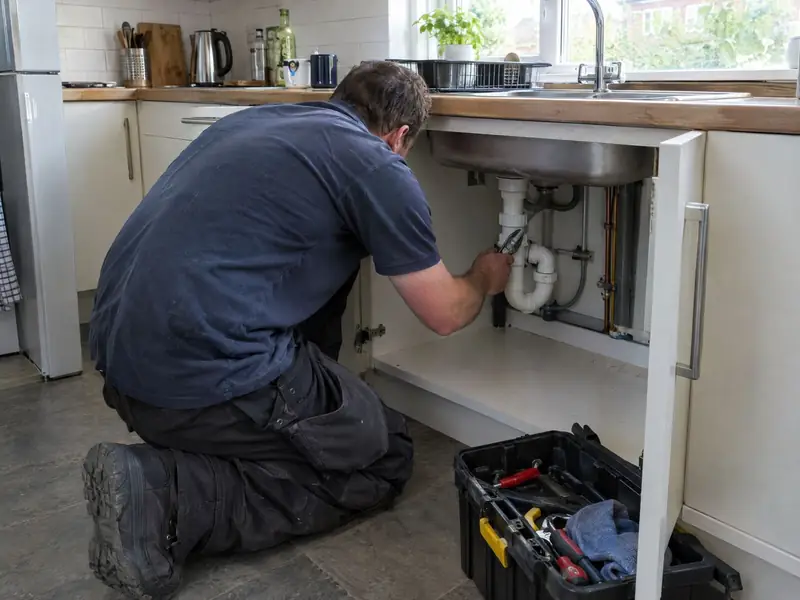
- Reactive repairs: leaks, heating faults, broken locks, damaged doors, and electrical and plumbing faults reported by tenants or found at inspection.
- Safety work: gas work by Gas Safe registered engineers and electrical work by qualified electricians, with certificates kept on file.
- Communal areas: coordinating cleaning of kitchens, bathrooms, halls and stairs, and keeping escape routes clear.
The Management Regulations 2006 require the manager of an HMO to maintain the common parts, fixtures, fittings and appliances, and each tenant's own room. A planned schedule makes that easier to show if your council inspects. Our management duties guide sets out the full list.
How do you keep fire alarm and emergency lighting records?
Fire alarm and emergency lighting systems only protect tenants if they work, and councils commonly ask for evidence that they are tested. We test them on the schedule set by the house's fire risk assessment and licence conditions, and record each test in a log kept with the property file.
Each record shows the date, what was tested, the result and any fault found. Faults are logged as repairs and fixed by our team, and periodic servicing is booked in the compliance diary. The Management Regulations require the manager to maintain fire-fighting equipment and alarms and keep escape routes clear, so we note blocked routes or damaged fire doors at every visit.
Smoke and carbon monoxide alarms are also checked as working on the first day of each new tenancy. If your system needs upgrading, our fire safety works team can quote.
What changed in the HHSRS in 2026?
The Housing Health and Safety Rating System is how councils assess hazards in rented homes. Revised regulations took effect on 23 June 2026, cutting the list from 29 hazards to 21 and simplifying the scoring bands. Councils must still act on Category 1 hazards, the most serious level. Since 1 May 2026 they also no longer have to give 24 hours' notice before entering a private rented property.
In shared houses, typical issues include fire safety, damp and mould, falls on stairs, electrical faults and kitchens or bathrooms that are too small for the number of people using them. Planned maintenance is the practical answer: deal with causes before an inspection finds them.
Awaab's Law applies to social housing but does not yet apply to private renting. A government consultation on extending it to private tenancies runs until 18 December 2026, so it makes sense to treat damp and mould reports as a priority now.
Can you handle void works between tenants?
Yes. When a room or the whole house is empty, it is the best time for work that would be disruptive with tenants in place. Typical void works include redecoration, new flooring, deep cleaning, repairs to doors and furniture, and checks on fire doors, alarms and electrics before the next tenant arrives.
Because our maintenance team is part of the same business that converts and refurbishes HMOs, larger jobs such as a new en-suite, a kitchen refit or fire safety upgrades can be planned into the void rather than waiting for a separate contractor. For bigger turnarounds, see our void refurbishment service.
We price work above an agreed limit for your approval before it starts, and send photos when it is finished. If the room is being let through us, we plan the work around the next move-in date.
What's included
- Planned maintenance schedule built around each house
- Reactive repairs logged and given an agreed priority
- Fire alarm and emergency lighting test records
- Communal area cleaning coordinated and checked
- Void works between tenancies
- Gas Safe engineers and qualified electricians for safety work
What does it cost?
Maintenance is priced by the job or as a planned schedule for the house, and work above an agreed limit is approved by you before it starts. For houses we manage, maintenance charges appear on your monthly statement with invoices.
Larger works such as refurbishment or fire safety upgrades are quoted in writing after a survey. You can start with our quote form.