
What happens in a typical HMO room turnaround?
It starts with an inspection as soon as the room is empty. We photograph and date the condition of every surface and fitting, note damage beyond normal wear, and list what is needed. Dated photos also help if you need to discuss deductions with the tenant or the deposit scheme.
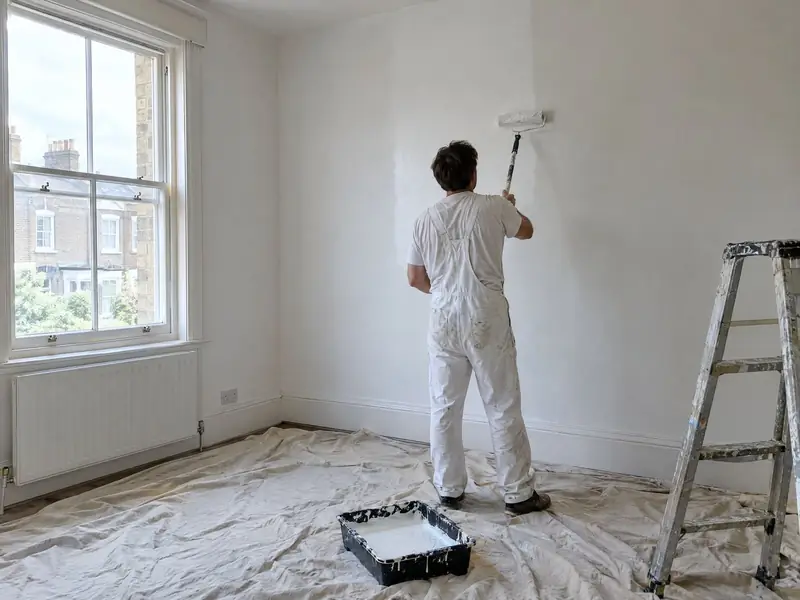
A typical list includes filling and redecorating walls and woodwork, repairing or replacing flooring where it is worn or stained, easing and adjusting doors, replacing broken fittings, treating any mould and finding its cause, resealing the shower and basin in an en-suite, and a deep clean of the room. Shared areas are checked at the same time, because a tired kitchen or hallway puts off viewers as much as the room itself. Fire doors get particular attention: disconnected closers, wedges, damaged seals and doors that no longer latch are common after a tenancy. Larger repairs that cannot wait are handed to our maintenance team.
Which safety checks should be done before a new tenant moves in?
Smoke alarms, and carbon monoxide alarms where there is a fixed combustion appliance, must be checked as working on the first day of each new tenancy. We test them during the turnaround so there are no surprises on move-in day, but the first-day check still needs doing by you or your agent. We also confirm the fire door to the room closes fully onto its latch and that the escape route is clear, since keeping escape routes clear and in good repair is an ongoing duty under the HMO management regulations.
Certificates are checked too. Gas appliances need a safety check every 12 months by a Gas Safe registered engineer, and a new tenant must receive a copy of the record before moving in. The electrical installation must be inspected and tested at least every five years by a qualified person. If either is due soon, we flag it so it can be done while the room is empty. Our safety certificates service can book these for you.
How do you keep the void period short?
Most delay in a turnaround comes from waiting: for a decision, for materials, or for one trade to finish before the next can start. We reduce each of those. Agreeing a standard specification with you in advance, such as one paint colour, one flooring type and one door closer model across your rooms, means common repairs can go ahead without a fresh decision each time and parts can be kept in stock.
Work is sequenced so trades overlap where it is safe: repairs and decorating first, flooring next, the deep clean last. You approve the written quote before work begins, and anything outside it is photographed and priced before we do it. When the room is finished, we send completion photos that can go straight into an advert. If we also let the room for you, it passes directly to our tenant find team. Remember that since 1 May 2026 you must publish an asking rent and cannot seek or accept offers above it.
When is a void the right time for bigger work?
An empty room is the easiest time to do work that would disturb a tenant: adding an en-suite, replacing a fire door, rewiring, or moving a wall to bring an undersized room up to standard. If a room has been let for a long time without changes, a void is a sensible moment to re-measure it and check it still meets the size standard in your licence.
Whole-house voids give more scope. Student houses often turn over in the summer, which can leave a window to replace a kitchen or bathroom with nobody living there; if you let under the student possession ground, our Ground 4A guide explains the timing rules. For larger upgrades, see HMO refurbishment or en-suite installation. We will tell you honestly whether the work fits the gap before the next tenant moves in.
What's included
- Move-out inspection with dated photos
- Repairs, filling and redecoration to an agreed standard
- Deep clean of the room and nearby shared areas
- Fire door, closer and alarm checks
- Gas safety and electrical report dates reviewed
- Completion photos ready for advertising the room
What does it cost?
Void work is quoted per room or per job after we have visited, because the condition an outgoing tenant leaves varies so much. You approve the written quote before any work starts. As a guide, light refurbishment of a lettable room typically falls within £1,800 to £3,500 per room (Midlands guide range, October 2026, including VAT where it applies). A simple clean and touch-up is quoted on its own terms.
Void work rarely needs council licence, planning or building control approval, but if a turnaround grows into works that do, those fees are extra and set by the council or approving body. Ask for a void quote.