
What gas safety checks does an HMO need?
Every gas appliance and flue the landlord provides must have a safety check by a Gas Safe registered engineer at least every 12 months. The engineer issues a gas safety record, and the rules that follow are specific:
- keep each record until two further checks have been done
- give existing occupiers a copy within 28 days of the check
- give new occupiers a copy before they move in
- a check carried out up to 2 months early can keep the original anniversary date
Under the Management of HMOs (England) Regulations 2006, the manager must also give the council the latest gas safety certificate within 7 days of a request. In an HMO each room has its own occupier, so we make sure copies reach everyone and that the record covers every appliance the landlord supplies, including boilers, fires and cookers.
When does an HMO need an EICR?
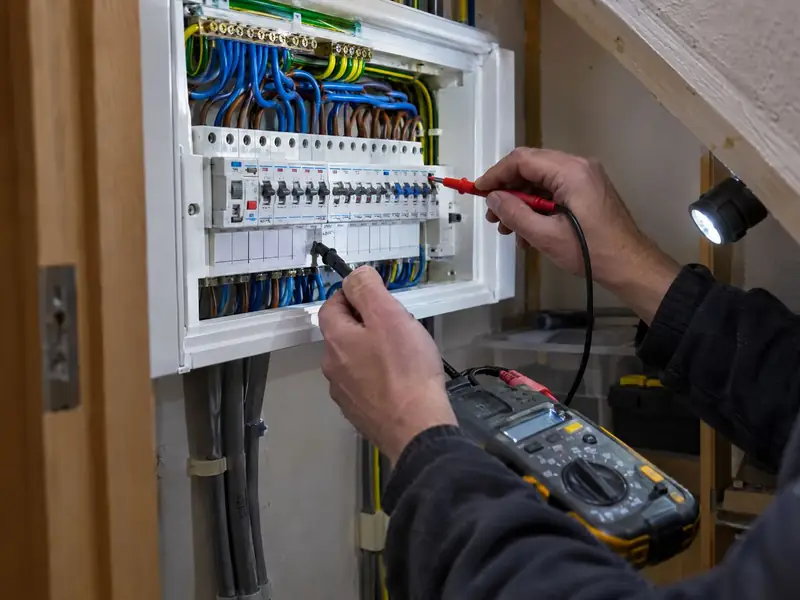
The fixed electrical installation must be inspected and tested by a qualified person before the tenancy starts and then at least every 5 years. The result is an electrical installation condition report, or EICR. The report may recommend a shorter interval, and licence conditions sometimes set one. You must then:
- give tenants a copy within 28 days of the inspection
- give the council a copy within 7 days of a request
- complete any remedial work the report calls for within 28 days, or sooner if the report says so
The maximum penalty for breaching the electrical safety regulations is £40,000. We arrange inspections with qualified electricians, explain what each finding means in plain terms, and quote for the remedial work as soon as the report is in, so the deadline is not missed. Keep written confirmation that the work is done with the report.
What are the smoke and carbon monoxide alarm rules?
The national rules for rented homes require:
- a smoke alarm on every storey with living accommodation
- a carbon monoxide alarm in every room with a fixed combustion appliance, such as a boiler or gas fire, but not a gas cooker
- alarms checked as working on the first day of each new tenancy
- faulty alarms repaired or replaced once the landlord is told
Councils can fine up to £5,000 for breaches. For licensed HMOs, the same duties apply through mandatory licence conditions rather than the alarm regulations themselves. In practice most HMOs need more than these minimums: a mains-wired interlinked alarm system is commonly required, with the type and coverage depending on the property's layout, size and fire risk assessment, and the council's HMO standards. Because each room is let separately, a new tenancy can start several times a year, so the first-day check belongs in every move-in. We record each check in the compliance diary.
Which other certificates do councils ask for?
Licensing teams commonly ask for evidence that fire safety equipment is maintained, not just installed. The usual documents are:
- a fire alarm inspection and servicing certificate from a competent engineer
- an emergency lighting test certificate, where emergency lighting is fitted
- a fire risk assessment for the common parts
- sometimes, test records for electrical appliances the landlord supplies, and confirmation that supplied furniture meets the fire safety rules
The Management of HMOs Regulations require the manager to maintain fire-fighting equipment and fire alarms, and servicing records are the evidence that this is happening. Licence conditions often go further and say how often servicing must happen and what must be sent to the council. We read your licence conditions, list every certificate they ask for and arrange each check with the right trade. For the assessment itself, see our HMO fire risk assessments service.
How does a compliance diary help?
An HMO has more dates to track than a single let, and they rarely fall in the same month. A compliance diary puts them in one place:
- gas safety record due dates, with the 2-month early window marked
- EICR due dates and any 28-day remedial deadlines
- fire alarm and emergency lighting servicing
- fire risk assessment reviews
- licence expiry and any deadlines in licence conditions
- first-day alarm checks for each new tenancy
We book checks before they fall due, send you a copy of every certificate and keep the file ready to send to the council on request. If you use our HMO management service, the diary runs as part of it. If you only want the certificates, we can run the diary on its own.
What's included
- Annual gas safety checks by Gas Safe registered engineers
- EICRs by qualified electricians, at least every 5 years
- Remedial electrical work quoted to meet the 28-day deadline
- Smoke and carbon monoxide alarm checks and replacements
- Fire alarm and emergency lighting servicing certificates
- Compliance diary with every due date in one place
What does it cost?
We quote per property, based on what the house needs. The main factors are:
- the number of gas appliances, and the size and age of the electrical installation
- the type of fire alarm system and how much emergency lighting is fitted
- whether you want one-off checks or an ongoing compliance diary
- any remedial work, which we quote separately once the report is in
Council fees are not part of our price. Licence fees are set by each council, planning application fees are fixed under the planning fee rules, and both are paid to the council, not to us. Request a quote or contact us with the address and your current certificate dates.