
Where do you start with a tired or non-compliant HMO?
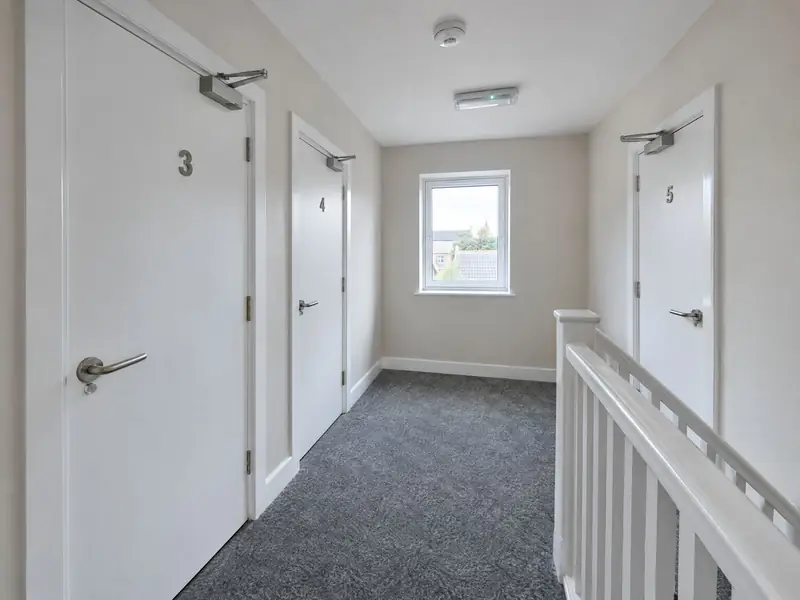
With a survey that looks at the house the way a council officer would. We measure every bedroom against the national minimums, which have applied through licence conditions since October 2018 and caught out some older layouts. We check fire doors, closers and gaps, the alarm system, escape routes, kitchen and bathroom provision against your council's amenity standards, and the dates on the gas safety record, electrical report and alarm certificates.
The result is a prioritised list in three parts: safety items to fix first, items needed for the licence or listed by the council, and optional improvements. If you already have a council schedule of works or an inspection letter, we work through it line by line and show which part of the quote answers each item. This is the same approach as our compliance audits, followed by the works. Certificates that are out of date are arranged through our safety certificates service.
Can the work be done while tenants are living there?
Usually, yes, with careful phasing. Rooms that are already empty, or about to be, go first. Occupied rooms are worked on by agreement, with access times arranged in advance and written notice given to tenants in line with their tenancies. Noisy work is kept to sensible hours.
Shared facilities are the hard part. Where a house has more than one bathroom, we replace them one at a time so one stays in use, and where the only kitchen is being renewed we sequence the job to keep cooking out of action for as short a time as possible. The manager's legal duties to keep escape routes clear and alarms working continue during the works, so if a system is being replaced, temporary detection stays in place until the new one is commissioned. Dust screens and floor protection keep belongings safe and walkways usable. Where you use a managing agent we arrange access through them, or through our own HMO management team if we run the house.
What works does a licence renewal usually bring?
An HMO licence lasts no more than five years, and a renewal can be the first time a council has looked closely at the house since it was first licensed. Standards may have moved on in that time: national bedroom sizes now apply to every licence, your council may have revised its amenity and fire standards, and some areas have introduced additional licensing. The renewal may come with new conditions or a list of works.
We recommend a survey well before the licence expires, so that any works are finished, certified and photographed before the application goes in. Common items include fire door upgrades, alarm extensions, extra kitchen storage or worktop, bathroom improvements and layout changes where a bedroom falls short. We can then prepare the paperwork through our licence applications service. For background on how the system works, see our licensing guide.
Is it worth upgrading beyond the minimum?
Sometimes. A refurbishment is usually the least disruptive moment for changes that would be difficult later: adding an en-suite while a room is empty, rewiring before redecorating, or moving a kitchen into a larger room. We price these as separate options so you can see what each adds.
Energy is worth thinking about now. The current legal minimum for private lets that need an EPC is a rating of E, and the government has confirmed a policy that private rented homes should reach EPC C or equivalent by 1 October 2030, although legislation is still needed. Insulation, heating controls and window upgrades are easier to fit while walls are open and rooms are empty. We give you building information and costs; for decisions about finance or tax, take your own regulated advice. Our en-suite and kitchen and bathroom pages cover those upgrades in more detail.
What's included
- Room-by-room condition and compliance survey
- Works list split into safety, licence and optional items
- Phasing plan that keeps occupied rooms usable
- Fire doors, alarms and escape routes brought up to standard
- Kitchens, bathrooms, electrics and decoration renewed as agreed
- Before and after photos and updated certificates
What does it cost?
Refurbishment is priced from the works list, so you can see the cost of each item and choose what to do now. Typical Midlands guide ranges, October 2026, including VAT where it applies:
- Light refurbishment per room: £1,800 to £3,500
- Standard refurbishment per room: £5,500 to £9,000
- Full strip-out per room: £9,000 to £14,000
- Fire doors, supplied and fitted: £450 to £750 each
- Fire alarm system: £700 to £1,600 per storey
Kitchens, bathrooms and en-suites are itemised where they form part of the work. Council licence fees, and any planning or building control fees, are extra and set by those bodies. Prices are confirmed after a free survey. Book a survey.